
.png?t=)
WORLD NATURAL BODY BUILDING
WELLNESS
La catégorie Wellness revient sur le devant de la scène lors des compétitions WNBB
Cette catégorie emblématique, qui valorise un physique harmonieux, athlétique et féminin, est de retour pour offrir aux athlètes une plateforme où la discipline, la beauté et la performance se rencontrent.
Après plusieurs saisons d’attente, cette réintégration marque une étape importante dans notre volonté de promouvoir la diversité des profils et de récompenser l’excellence sous toutes ses formes.
.jpg?t=a666a9a2_baf7_4dbe_9e61_32f0482018ef)
Toutes les photos utilisées dans ce livret ont été prises pendant des compétitions. Elles sont libres de droit et utilisées exclusivement dans un but éducatif et règlementaire. Chaque athlète peut demander pour motif légitime le retrait de sa photo.
The Wellness category returns to the spotlight at WNBB competitions
This iconic category, which highlights a harmonious, athletic, and feminine physique, is back to offer athletes a platform where discipline, beauty, and performance come together.
After several seasons of waiting, this reintegration marks an important step in our commitment to promoting diversity of physiques and rewarding excellence in all its forms.
Sommaire :
1 : LA TENUE
2 : LES PASSAGES
Les poses corrigées
Les comparaisons
Le passage libre
3 : LES CATÉGORIES
4 : LES CRITERES DE JUGEMENT
5: LA REMISE DES RÉCOMPENSES
6: SÉLÉCTION TOUTES CATÉGORIES
Summary:
1: ATTIRE
2: ROUNDS
Corrected Poses
Comparisons
Free Routine
3: CATEGORIES
4: JUDGING CRITERIA
5: AWARDS CEREMONY
6: ALL CATEGORIES SELECTION
1 : LA TENUE - ATTIRE
A tout niveau de compétition :
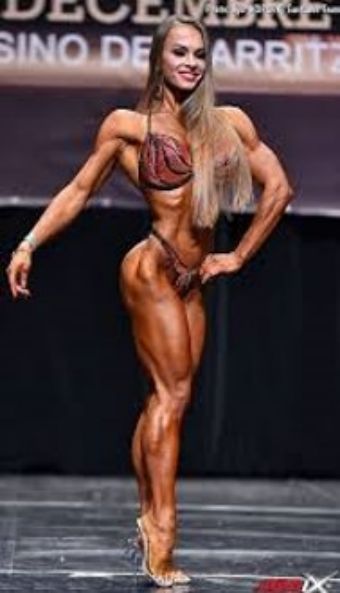
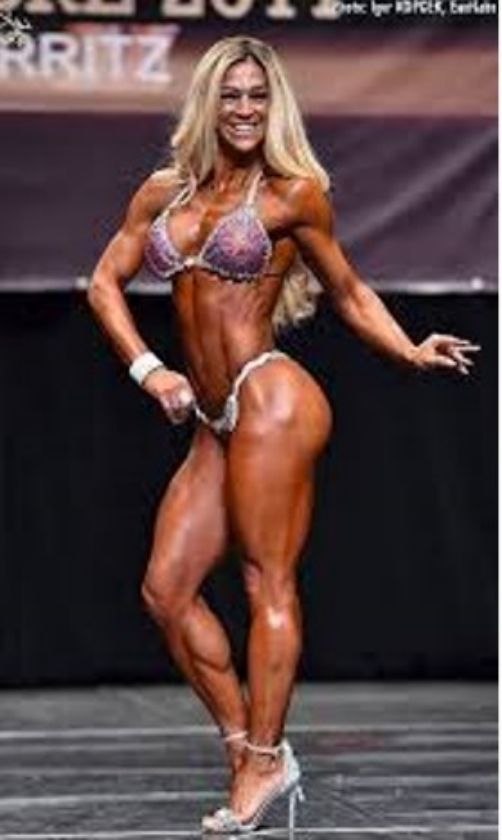
Maillot femme
• couleur unie
• Pas de motif
• Brillants, effet paillettes strass autorisés
• largeur sur coté comprise entre 1 et 2 cm
• String INTERDIT
• Maillot deux pièces
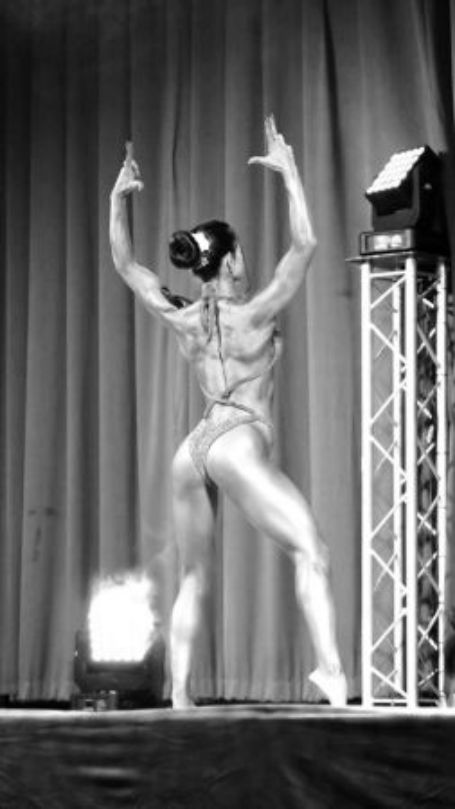
• Haut de maillot croisé dans le dos conseillé (croisement non obligatoire)
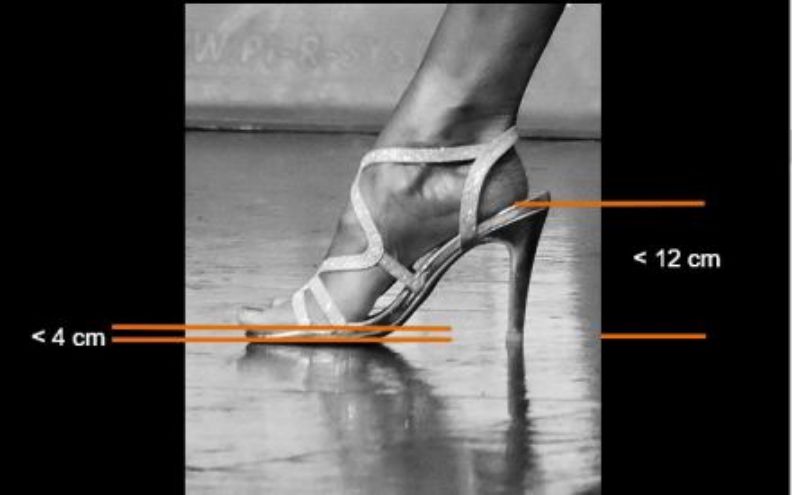
• Chaussures à talon.
- Bijoux autorisés
- Boucles d’oreilles autorisées
- Le bronzage doit être bien réparti (corps et visage) et sec au touché lors de la montée sur scène
- L'épilation ou le rasage de tout le corps est obligatoire
- Numéro de dossard à gauche à la taille toujours visible
- Tout changement de tenue est interdit entre les différents passages
N.B Après contrôle de la tenue, tout manquement entraînera automatiquement la disqualification de l’athlète si aucune remédiation est possible.
At all levels of competition:
Women’s Suit
• Solid color
• No patterns
• Sparkles, glitter effect, rhinestones permitted
• Side width between 1 and 2 cm
• Thong PROHIBITED
• Two-piece suit allowed
• Back-crossed top recommended (crossing not mandatory
• High-heeled shoes
Jewelry permitted
Earrings permitted
Tanning must be evenly applied (body and face) and dry to the touch when stepping on stage.
Full body hair removal (shaving or waxing) is mandatory.
Athlete’s number badge must be worn on the left side of the waist and remain clearly visible.
No outfit changes are allowed between rounds.
Note: After attire inspection, any non-compliance that cannot be corrected will result in the immediate disqualification of the athlete.
Haut de maillot croisé dans le dos (croisement non obligatoire)
Top crossed at the back (crossing not mandatory)
2 : LES PASSAGES
PREMIERE ÉTAPE : LES POSES CORRIGÉES
- PREMIERE ETAPE :
LES POSES CORRIGÉES
à tout niveau de compétition et toutes catégories :
Sous la direction du chairman tous les athlètes d’une même catégorie montent sur scène. Le chairman présente chaque athlète dans l’ordre croissant des dossards. A l’appel de son numéro l’athlète fait un pas en avant. Une pose libre est autorisée.
Une fois tous les athlètes présentés, les poses sont effectuées.
Les quatre poses sont toujours effectuées avec une rotation à gauche:
• Face
• Profil droit
• Dos
• Profil gauche
- FIRST STEP:
CORRECTED POSES
At all levels of competition and in all categories:
Under the direction of the chairman, all athletes in the same category come on stage.
The chairman introduces each athlete in ascending order of their number badges.
When their number is called, the athlete takes one step forward.
One free pose is allowed.
Once all athletes have been introduced, the poses are performed.
The four poses are always executed with a leftward rotation:
• Front
• Right Side
• Back
• Left Side
DEUXIEME ÉTAPE : LES COMPARAISONS
A tout niveau de compétition et toutes catégories :
Avant toute comparaison, des tiroirs peuvent être effectués. La moitié gauche des athlètes devra reculer d’un pas et la moitié droite des athlètes devra avancer d’un pas. Cela permet au chairman de faire un tiroir et les athlètes effectuent de nouveau les poses imposées.
Après avoir été remis dans l’ordre croissant des dossards, les athlètes sont alignés en fond de scène. Des comparaisons par 3 peuvent alors être demandées par les juges afin d’estimer au mieux les physiques des athlètes et affiner le classement. Les demandes de comparaisons sont énoncées par le chef de table.
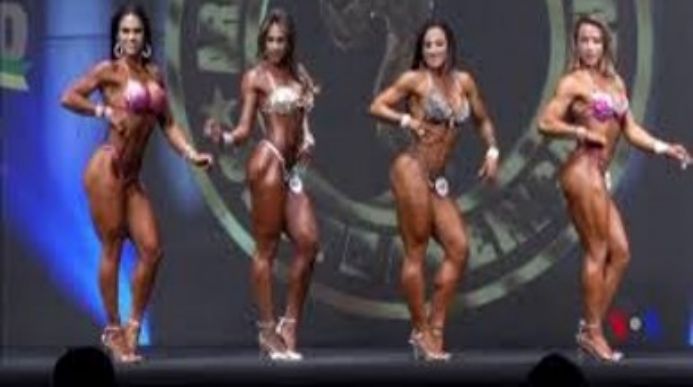
At all levels of competition and in all categories:
Before any comparisons, drawer shifts may be performed.
The left half of the athletes must take one step back, and the right half must take one step forward.
This allows the chairman to create a drawer shift, after which the athletes repeat the mandatory poses.
Once reorganized in ascending order of their number badges, the athletes are lined up at the back of the stage.
Comparisons in groups of three may then be requested by the judges to better evaluate the athletes’ physiques and refine the rankings. Comparison requests are announced by the head judge.
TROISIEME ÉTAPE : LE PASSAGE LIBRE
• Durée : 1mn00
• Le passage est libre au choix de l’athlète
• Tenue : identique en tous points à celle des poses imposées. Aucun accessoire autorisé.
• Les athlètes n’ont pas l’obligation de faire leur passage en talons.
Le passage est libre et doit être en corrélation avec la musique.
L'originalité de la musique, du passage et la relation musique/mouvement sont évalués.. Elle compte pour la note finale. Cette note sert essentiellement à affiner les classements en cas de besoin dans le cas où des athlètes seraient éventuellement exæquo..
Cette prestation doit être de qualité afin d’assurer un spectacle performant et attrayant pour le public. De ce fait elle doit être renouvelée, modifiée d’une compétition à l’autre. Le manquement de renouvellement sera pénalisant.
NOTA : la partition doit être envoyer par mail au moment de l’inscription à la compétition en format MP 3 ou MP 4 uniquement et doit impérativement durer 1 mn
En cas de non respect ou manquement l’organisation choisira aléatoirement un morceau de musique de 1 minute
Duration: 1 minute for both men and women
Choreography: Freely chosen by the athlete
Attire: Must be identical to that worn during the mandatory poses. No accessories allowed.
Athletes are not required to perform their routine in heels.
The choreography is free.
The originality of the music, the choreography, and the synchronization between music and movement are evaluated.
This round contributes to the final score and is mainly used to refine rankings in the event of a tie between athletes.
The performance must be of high quality to ensure a successful and engaging show for the audience.Therefore, it must be renewed and modified from one competition to the next. Failure to renew will result in a penalty.
NOTE: The score must be sent by email at the time of competition registration in MP3 or MP4 format only and must be at least 1 minute long.
In case of non-compliance or breach of rules, the organization will randomly choose a 1-minute piece of music.
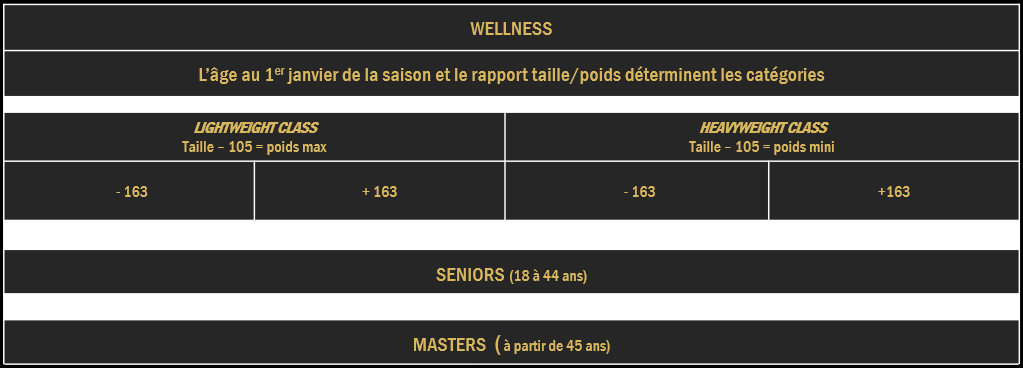
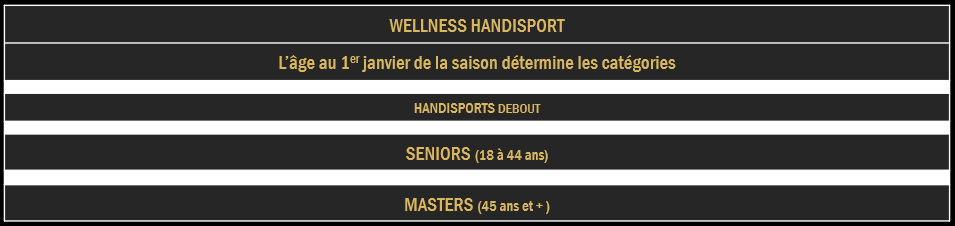
3 : LES CATÉGORIES
4 : LES CRITERES DE JUGEMENT - JUDGING CRITERIA
Les critères généraux de jugement sont regroupés et jugés en quatre items:
1. Harmonie du corps, symétrie, ligne, équilibre des masses.
Le bas du corps doit être proportionnel au haut du corps.
Le coefficient de notation est de 35% de la note finale.
2. Hypertrophie, volume et densité musculaire.
Les athlètes doivent avoir des formes, du volume musculaire.
Le coefficient de notation est de 35% de la note finale.
3. Définition musculaire.
La définition musculaire doit être harmonieuse sur l’ensemble du corps, mais sans l’apparence de maigreur ou d’anorexie.
Le coefficient de notation est de 25% de la note finale.
4. La chorégraphie libre doit être réalisée sur la musique ( l’originalité de la musique, de la chorégraphe et la relation musique /mouvement sont évalués).
Le coefficient de notation est de 5% de la note finale.
The general judging criteria are grouped and evaluated in four items:
1. Body Harmony, Symmetry, Line, and Balance of Proportions
The lower body must be proportional to the upper body.
Weight in scoring: 35% of the final score
2. Hypertrophy, Muscle Volume, and Density
Athletes must display shape and muscle volume.
Weight in scoring: 35% of the final score
3. Muscle Definition
Muscle definition must be harmonious throughout the body, without giving the appearance of thinness or anorexia.
Weight in scoring: 25% of the final score
4. Free Routine
The routine must be performed to music (originality of the music, the choreography, and the relation between music and movement are evaluated).
Weight in scoring: 5% of the final score
Critères par catégories :
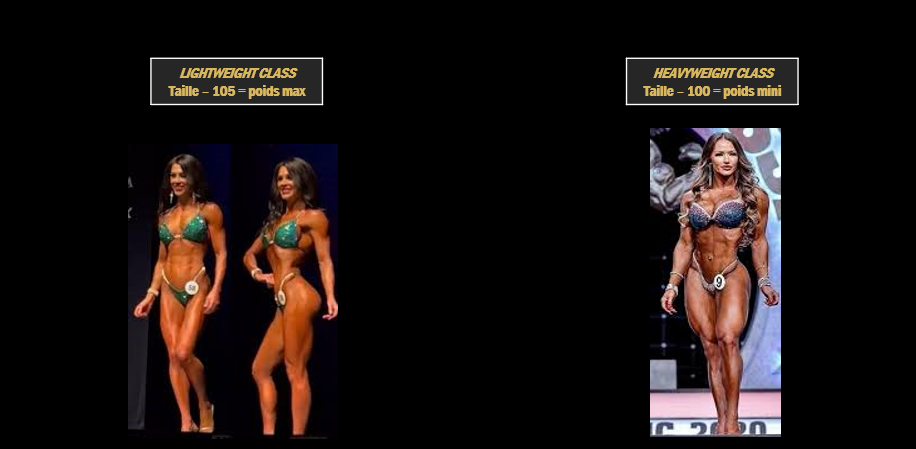
Les critères s’appliquent aux femmes et aux hommes des deux classes lightweight et heavyweight.
Culturisme « LIGHTWEIGHT CLASS»
Culturisme « HEAVYWEIGHT CLASS»,
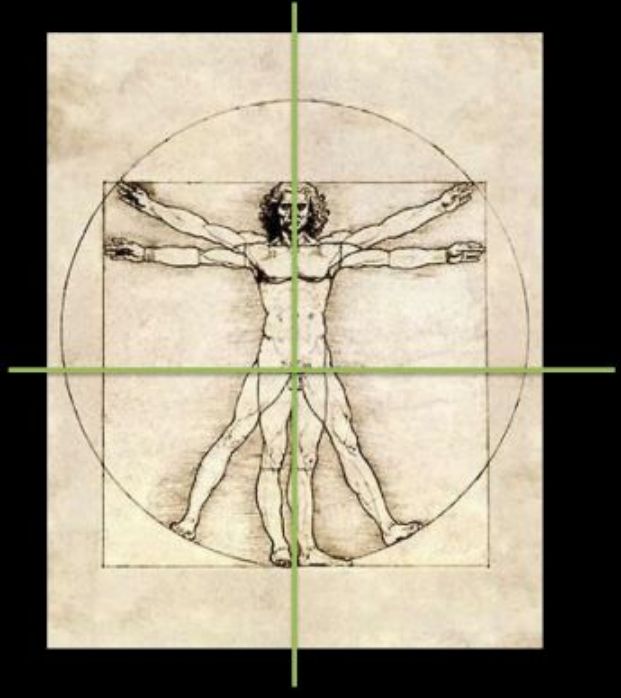
les athlètes devront être bien proportionnés, avoir une bonne hypertrophie et donc avoir de la masse musculaire, du volume, et du galbe.
Les athlètes doivent avoir des biceps très nettement plus gros que les avants bras, des triceps parfaitement développés, des épaules bien développées et bien rondes, un dos très développé, en V et massif, des cuisses bien galbées avec de gros quadriceps, ischios, fessiers et des mollets clairement développés.
La définition musculaire doit permettre d’apprécier le relief musculaire, l’ensemble des différents muscles, pouvant laisser apparaitre les stries de leurs fibres, ainsi que les veines sous cutanées.
Category Criteria:
The criteria apply to both men and women in the Lightweight Class and the Heavyweight Class.
Bodybuilding – LIGHTWEIGHT CLASS
Bodybuilding – HEAVYWEIGHT CLASS
Athletes must be well-proportioned, with clear hypertrophy, showing muscle mass, volume, and shape.
They must present:
Biceps clearly larger than the forearms
Perfectly developed triceps
Well-developed, rounded shoulders
A very wide, V-shaped, massive back
Well-shaped thighs with large quadriceps, hamstrings, glutes, and clearly developed calves
Muscle definition must highlight muscular relief and all muscle groups, with possible appearance of striations in the fibers and visible subcutaneous veins.
WELLNESS "LIGHTWEIGHT CLASS"
WELLNESS "HEAVYWEIGHT CLASS"
5 - LA REMISE DES RÉCOMPENSES - THE AWARDS CEREMONY
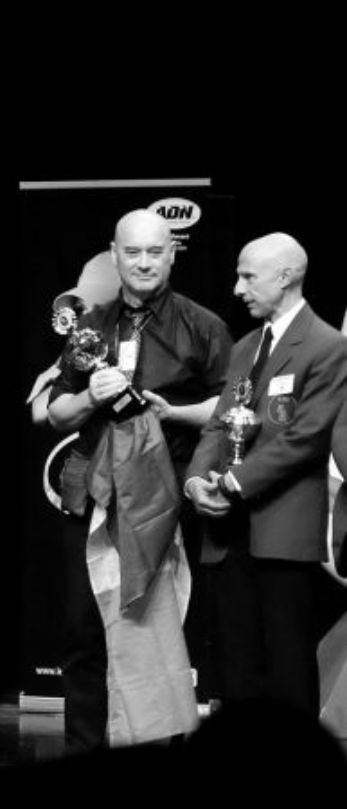
Les récompenses se font par disciplines et catégories.
Seul les 3 premiers seront appelés pour les récompenses sur le podium dans l’ordre suivant :
- Premier appelé le 3°, médaille de bronze et diplôme de classement
- Deuxième appelé le 2°, médaille d’argent et diplôme de classement
- Troisième appelé le 1°, médaille d’or et diplôme de classement
Tous les autres athlètes auront une récompense / trophée participatif, et pourront participer à la photo de groupe finale de leur catégorie
Lors de la remise des récompenses, un trophée de la meilleure chorégraphie libre / ou posing libre est remis à l’athlète le plus méritant.
.png?t=a666a9a2_baf7_4dbe_9e61_32f0482018ef)
Awards are given by discipline and category.
Only the top three will be called to the podium for their awards ceremony in the following order:
- First place (called 3rd) receives a bronze medal and a ranking certificate.
- Second place (called 2nd) receives a silver medal and a ranking certificate.
- Third place (called 1st) receives a gold medal and a ranking certificate.
All other athletes will receive a prize/participatory trophy and will be able to participate in the final group photo for their category.
During the awards ceremony, a trophy for the best free routine/posing performance will be awarded to the most deserving athlete.
6 - SÉLECTION TOUTES CATÉGORIES - SELECTION ALL CATEGORIES
Le toute catégorie permet d’élire le champion des champions.
Pour participer au toute catégorie l’athlète doit remplir 3 conditions :
- Être premier de sa catégorie
- Avoir obtenue une note supérieure à 13
- Seules les 10 meilleures notes peuvent concourir
Il peut donc y avoir moins de 10 athlètes sur le toute catégorie, mais jamais plus
> En revanche il faut un minimum de 3 athlètes représentant 3 catégories
.png?t=a666a9a2_baf7_4dbe_9e61_32f0482018ef)
The all-categories competition determines the champion of champions.
To participate in the all-categories competition, athletes must meet three conditions:
- Be first in their category
- Have obtained a score higher than 13
- Only the 10 highest scores can compete
Therefore, there can be fewer than 10 athletes in the all-categories competition, but never more.
> However, a minimum of 3 athletes representing 3 categories is required.
7 : LES POSITIONS CORRIGÉES - CORRECTERD POSES
Attitude générale :
Auto grandissement, port de tête « digne »,être souriant
General Attitude:
Maintain an upright posture, a dignified head carriage, and a smiling expression.
Position corrigée de face
Buste:
En ouverture maximale et évasement du dos optimum, « poitrine vers le plafond » sans bascule du corps en arrière Epaules alignées, abdominaux, bras et avant bras contractés.
Jambes:
Toujours contractées au maximum. Suivant la définition et volume plus ou moins fléchies. Forcer au niveau coxo-fémoral comme pour faire une rotation externe. Possibilité de relever les pointes de pieds. Bassin en antéversion.
.jpg?t=a666a9a2_baf7_4dbe_9e61_32f0482018ef)
Corrected Front Position
Torso:
Maximum opening and optimal back flaring, “chest toward the ceiling” without leaning the body backward.
Shoulders aligned, abdominals, arms, and forearms contracted.
Legs:
Always maximally contracted. Depending on definition and volume, they may be more or less bent.
Engage the hip joint as if performing an external rotation.
Possibility of raising the toes.
Pelvis in anterior tilt.
Position corrigée de profil
Buste:
En ouverture maximale, « poitrine vers le plafond » sans bascule du corps en arrière Epaules alignées, bras et avant bras contractés
Jambes:
Toujours contractées au maximum. Suivant la définition et volume plus ou moins fléchies. Les jambes ne sont pas forcément alignées. Forcer au niveau coxo-fémoral comme pour faire une rotation externe. Bassin en antéversion. Faire comme si on voulait décoller les talons pour faire ressortir les mollets.
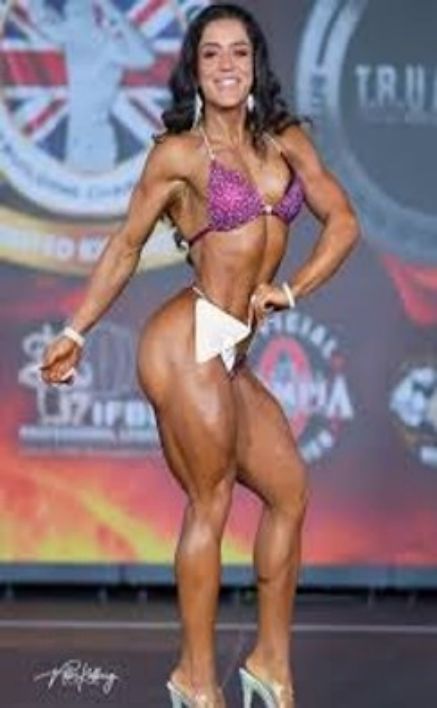
Corrected Side Position
Torso:
Maximum opening, “chest toward the ceiling” without leaning the body backward.
Shoulders aligned, abdominals, arms, and forearms contracted.
Legs:
Always maximally contracted. Depending on definition and volume, they may be more or less bent.
The legs are not necessarily aligned.
Engage the hip joint as if performing an external rotation.
Pelvis in anterior tilt.
Simulate lifting the heels to emphasize the calves.
Position Corrigée de dos
Buste :
En ouverture maximale, « poitrine vers le plafond » sans bascule du corps en arrière Epaules alignées, bras et avant bras contractés
dos:
En ouverture maximale, « occuper de l’espace ». Omoplates parfaitement fixées, bras légèrement ouverts, bassin plus ou moins en antéversion.
Jambes:
Toujours contractées au maximum. Suivant la définition et volume plus ou moins fléchies. Forcer au niveau coxo-fémoral comme pour faire une rotation externe. Bassin en antéversion. Faire comme si on voulait décoller les talons pour faire ressortir les mollets.
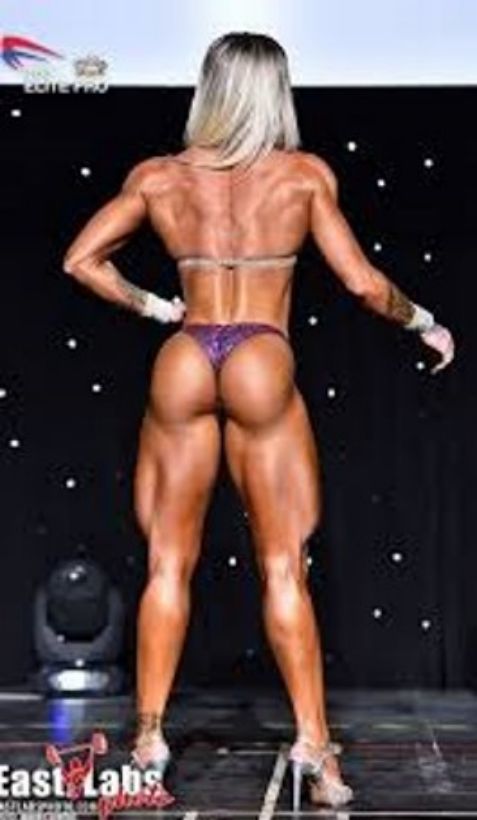
Corrected Back Position
Torso:
Maximum opening, “chest toward the ceiling” without leaning the body backward.
Shoulders aligned, abdominals, arms, and forearms contracted.
Back:
Maximum expansion, “occupying space.”
Shoulder blades perfectly fixed, arms slightly open, pelvis in more or less anterior tilt.
Legs:
Always maximally contracted. Depending on definition and volume, they may be more or less bent. Engage the hip joint as if performing an external rotation.
Pelvis in anterior tilt. Simulate lifting the heels to emphasize the calves.